
Patient Guide ... Preventive Dentistry
-
Patient Guide ... Preventive Dentistry -
Dental Check-ups What to Expect and Why They Matter
A practical guide to what happens in the chair, when X-rays or preventive care may be recommended, and how your dentist decides the right recall interval for you.
This article provides general dental information only. It does not replace an individual assessment. Please speak to your dentist about your symptoms, risks and recommended care.
Clinically reviewed by Dr Asfiya Anjum, Principal Dentist, A&M Dental Group.
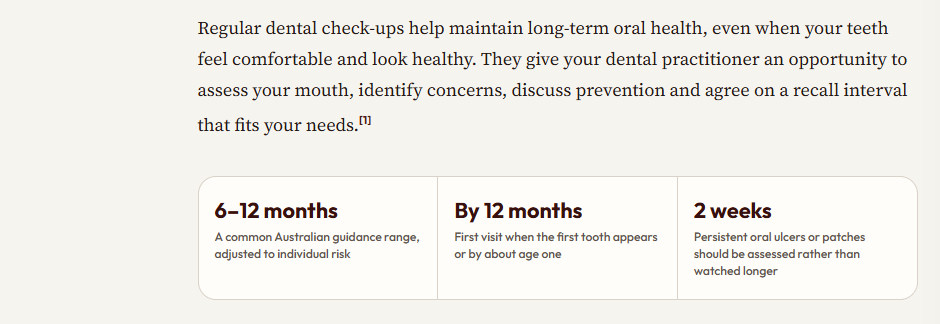
Regular dental check-ups help maintain long-term oral health, even when your teeth feel comfortable and look healthy. They give your dental practitioner an opportunity to assess your mouth, identify concerns, discuss prevention and agree on a recall interval that fits your needs. [1]
“A dental check-up assesses your teeth, gums and the soft tissues of your mouth. It may also include a professional clean, preventive advice or treatment, and X-rays when clinically indicated. How often you need a check-up should be based on your individual oral-health risk rather than a single interval for everyone.”
QUICK ANSWER
What happens during a dental check-up?
A check-up starts with a review of what has changed since your last visit. Your dentist or oral health practitioner may ask about pain, sensitivity, bleeding gums, dry mouth, medicines, medical conditions, smoking, alcohol use and diet because these can affect oral-health risk.
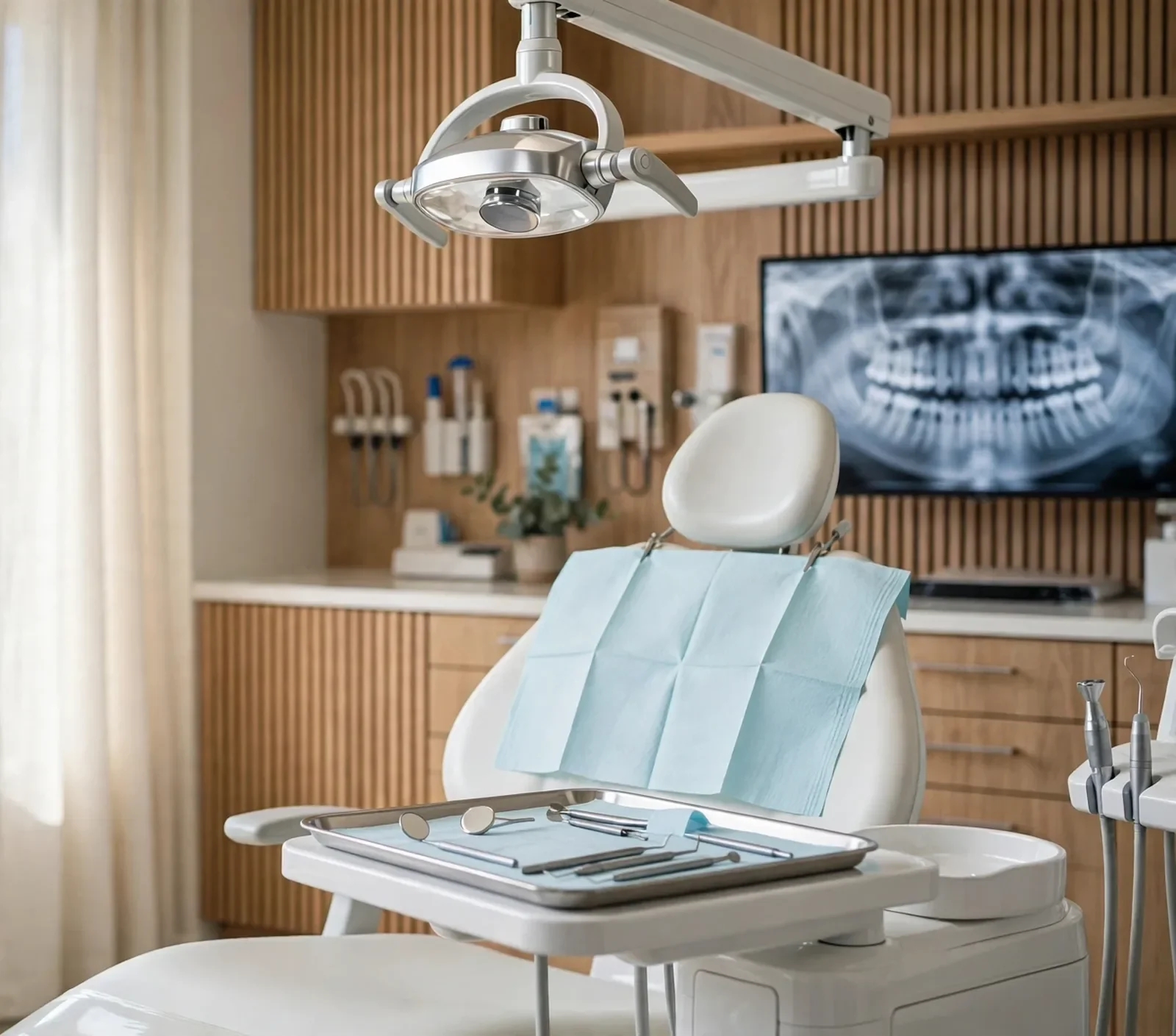
Examination of the teeth, gums and mouth
The practitioner examines your teeth for signs of decay, wear, cracks or failing restorations. They also assess the gums and supporting tissues and inspect the lips, tongue, cheeks, palate and floor of the mouth. A visual and tactile check of these areas can help identify changes that may need monitoring or further assessment. [4]
Professional cleaning when appropriate
A professional clean may be provided as part of the appointment or arranged separately, depending on your needs and the practice's appointment structure. Scaling removes plaque and calculus—hardened tartar—that brushing and flossing cannot remove. Polishing and personalised cleaning advice may follow.
Calculus around the gumline can contribute to inflammation. If your gums bleed, feel tender or look swollen, mention it during the visit rather than assuming it is normal.
X-rays only when clinically indicated
X-rays are not automatically required at every check-up. They may be recommended to investigate symptoms or to look for problems that are difficult to see directly, such as decay between teeth or changes in the bone around teeth. Your practitioner should explain why an image is recommended in your situation.
Preventive care based on risk
Depending on age and risk, the visit may include fluoride treatment, fissure sealants or advice about brushing, cleaning between the teeth, sugar exposure and other habits. Evidence supports fissure sealants for preventing decay in children's and adolescents' permanent molars, while fluoride varnish can reduce caries in children in appropriate settings. [5][6]
How often should dental check-ups happen?
Healthdirect advises Australians to aim for check-ups every 6 to 12 months, while also stating that the correct interval depends on the health of the individual's teeth and gums. [1] Research comparing fixed and risk-based recall schedules supports a more individual approach for adults.
A Cochrane review found little to no important difference in several oral-health outcomes when eligible adults were assigned to six-month, 24-month or risk-based recall strategies, although not every interval is suitable for every patient. [2] A later scoping review similarly concluded that recall advice should be customised rather than universal. [3]
You may need more frequent review if your risk is higher
Your dentist may advise shorter intervals if you have active gum disease, repeated new decay, dry mouth, relevant medical conditions, pregnancy-related oral changes, tobacco exposure or difficulty maintaining oral hygiene. The decision should follow an individual risk assessment, not a generic timetable.
Children should start early
Australian guidance recommends a child's first dental visit when the first tooth appears or by about 12 months of age.[7] Early visits help families establish preventive habits and allow the practitioner to recommend a schedule suited to the child's development and decay risk.
Lower-risk adults may be reviewed less often
If you have stable oral health, effective daily cleaning and no important risk factors, your dentist may consider a longer interval. Ask what features of your assessment led to the recommendation and what changes should prompt an earlier visit
Why check-ups matter beyond finding tooth decay
Long-term observational studies associate routine dental attendance with better oral-health outcomes. In the Dunedin longitudinal study, more favourable visiting patterns were associated with better clinical oral health and oral-health-related quality of life. [8] A separate study of British adults found that people who had always attended regularly had better periodontal findings than former or never-regular attenders. [9]
Oral and general health share risk factors, and periodontal disease is associated with conditions including diabetes and cardiovascular disease. However, an association does not prove that dental visits prevent those systemic conditions. The clearer benefit is that a check-up creates a structured opportunity to assess oral disease, discuss tobacco, alcohol and dietary sugar, and coordinate care when medical conditions affect the mouth. A 2024 Canadian longitudinal analysis also reported associations between dental visiting, better self-reported oral health and lower multimorbidity, but its observational design cannot establish causation. [10]
How to make your check-up more useful
A check-up is most valuable when the conversation is specific. Tell your practitioner what has changed, ask what they found, and make sure you understand the reason for any suggested X-ray, preventive treatment or recall interval.
Do not wait for a routine recall if you develop persistent tooth pain, swelling, bleeding gums, or a mouth ulcer, lump, red patch or white patch that does not heal within two weeks. These symptoms can have many causes, but persistent changes should be assessed. [11]
Questions worth bringing to the appointment
What is my current risk of tooth decay and gum disease?
Are there areas I am consistently missing when I clean?
Do I need X-rays today, and what question will they answer?
Would fluoride, fissure sealants or another preventive measure suit my risk?
When should I return, and what symptoms should bring me back sooner?
Dental Check-ups FAQs
-
No. X-rays are taken when they are clinically indicated. Your dentist considers your symptoms, examination findings, oral health history and previous images before recommending them.
-
Australian public health guidance commonly suggests every 6 to 12 months, but the best interval depends on your individual risk. Your dentist may recommend a shorter or longer interval after assessing your teeth, gums, health history and habits.
-
No. Tooth decay and gum disease can develop before they cause obvious pain. A check-up can identify concerns and allow you to discuss prevention or treatment options before symptoms become more disruptive.
-
Australian guidance recommends a first dental visit when the first tooth appears or by about 12 months of age. The dentist can then recommend a recall schedule based on the child's needs.
-
Most dental check-ups in private clinics are not covered by Medicare. Some eligible children can receive services through the Child Dental Benefits Schedule, and private health insurance may contribute depending on the policy. Check your eligibility and cover before the appointment.
-
Contact a dental practitioner sooner if you have persistent tooth pain, swelling, bleeding gums or a mouth ulcer, lump, red patch or white patch that does not heal within two weeks. These symptoms can have many causes, but they should be assessed.
References
Healthdirect Australia. Dental check-up. Reviewed 2025.
Fee PA, Riley P, Worthington HV, et al. Recall intervals for oral health in primary care patients. Cochrane Database of Systematic Reviews. 2020;CD004346.Amarasena N, Gnanamanickam ES, Miller J. Effect of different frequencies of dental visits on dental caries and periodontal disease: a scoping review. International Journal of Environmental Research and Public Health. 2023;20:6858.