

A&M Dental Group · Balcatta
Dental Implants in Balcatta
A dental implant is one possible way to replace a missing tooth. If you are considering an implant, we can assess your oral health, explain the stages and discuss whether it may be suitable for you.
At A&M Dental Group, our planning conversations may include digital intraoral scans to help record the shape of your teeth and bite. A scan is one part of an assessment; separate imaging may be needed to assess the jawbone.
THE BASICS
What is a dental implant?
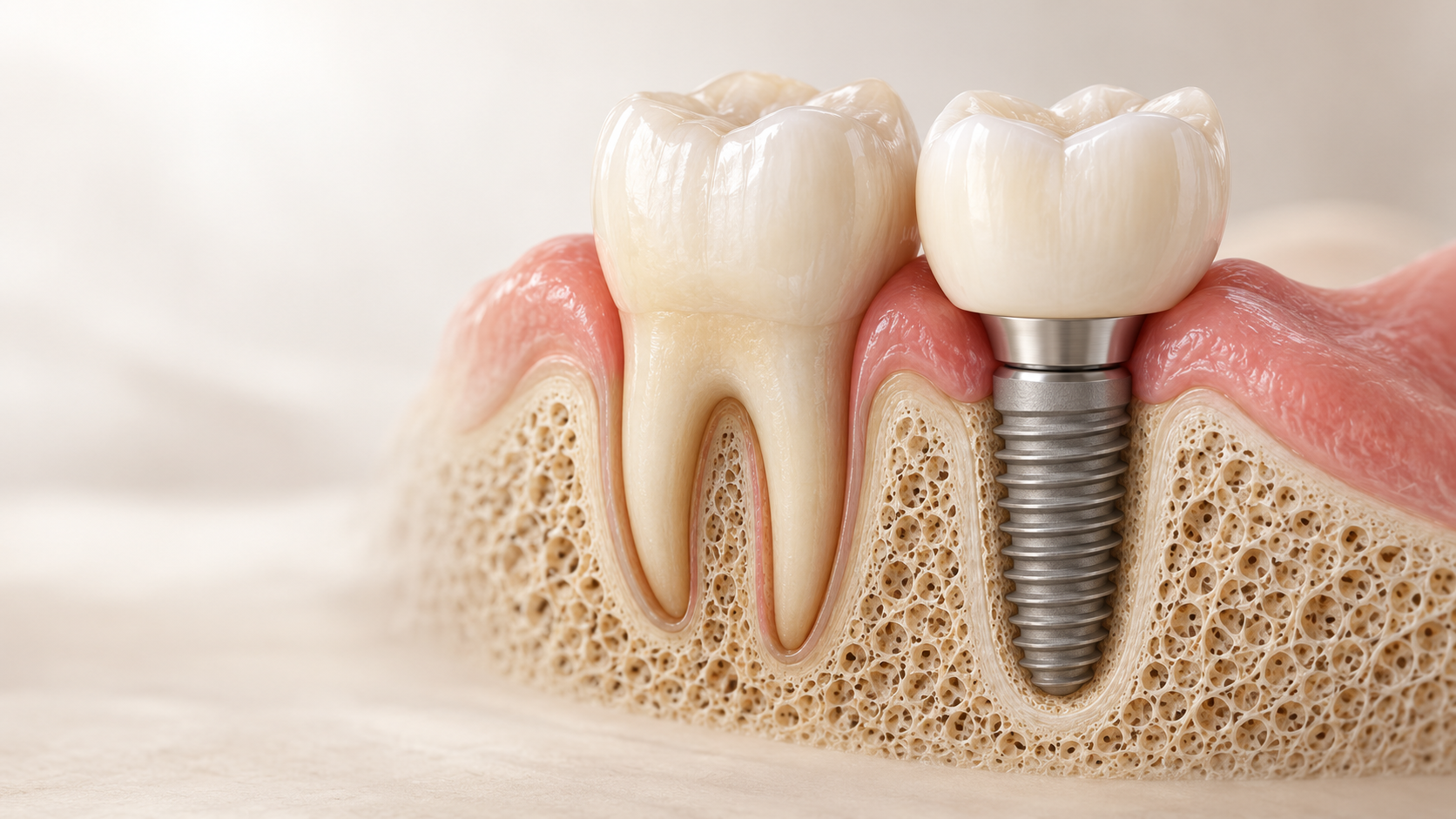
An implant is an artificial root, commonly made of titanium, placed into the jawbone by a dental professional. After healing, a connecting part called an abutment and a replacement tooth called a crown may be attached. Implants can also support some other types of restorations, depending on the case.
Replacing a missing tooth is an individual decision. An implant involves surgery, several stages and ongoing care. A bridge or removable denture may be more suitable for some people; in some situations, leaving a space may also be discussed.
An implant is not a natural tooth and cannot be promised to last indefinitely. Assessment helps clarify the likely benefits, limitations, risks and alternatives for your situation.
SUITABILITY FIRST
What happens at an implant assessment?
The first step is to understand the missing tooth, your overall oral health and what you want to know before deciding on treatment.
01
Your concerns
Discuss the missing tooth, your goals, medical history, medicines and any previous dental treatment.
02
Oral examination
The practitioner can examine teeth, gums and the mouth, and consider how the teeth are developing.
03
Records if needed
Dental X-rays or other imaging may be needed to assess the jawbone and nearby anatomy. An intraoral scan may record the surface shape of teeth and bite.
04
Your options
Discuss whether an implant is suitable, other options, possible additional steps, costs and risks before you decide.
A STAGED PROCESS
How implant treatment may progress
This is a general outline for a single missing tooth. Your plan may differ. A&M will explain which stages are provided at the practice and whether a referral is appropriate for any part of your care.
01 / Assess
Examination and plan
Review oral health, gum condition, bone, medical factors and replacement options. Any required imaging or referral is discussed.
02 / Prepare
Prepare the site, if needed
Some people need treatment for gum disease, removal of a damaged tooth or assessment for bone grafting before placement. These steps are not needed in every case.
03 / Place
Implant Placement
If suitable and agreed, a dental professional places the implant in the jawbone using an individually planned surgical approach. The clinician will discuss anaesthesia, risks and aftercare.
04/ Heal
Healing and review
Time is allowed for healing and for the bone to integrate with the implant. The schedule varies, and the site is reviewed before the final restoration is planned.
05/ Restore
Healing and review
A digital intraoral scan may help record the teeth and bite for designing a crown. The final restoration is fitted after the clinician confirms that the implant and tissues are ready.
06/ Maintain
Ongoing care
Clean around the implant and attend reviews at a recommended interval. The crown or other components may need maintenance, repair or replacement over time.
DIGITAL RECORDS
Where an intraoral scan fits
A&M has an intraoral scanner. It creates a digital record of the visible teeth, gums and bite. This may help the team discuss the space and plan or communicate details for an implant-supported crown, depending on the case.
It does not show the jawbone, nerves or sinuses. Dental X-rays and, when clinically indicated, three-dimensional imaging are separate tools used to assess anatomy for surgical planning. Your dentist will explain which records are needed and whether imaging is performed at A&M or elsewhere.
Questions to bring to your visit
What does the scan show? Do I need other imaging? Who will place the implant and make the crown? What could change the plan or total cost?
CHOICE MATTERS
Other ways to manage a missing tooth
Dental bridge
A fixed replacement supported by neighbouring teeth. Conventional bridges usually involve preparing the supporting teeth. Discuss the likely effect on those teeth and future care.
An implant is not the only option. The condition of nearby teeth, gums and bone, your preferences and the costs may affect the decision
Partial denture
A removable option to replace one or more teeth. It needs fitting and ongoing cleaning and may need adjustment as the mouth changes.
No immediate replacement
In some circumstances, monitoring the gap may be considered. Ask what this could mean for your bite, appearance or ability to clean the area..
Related care: Explore A&M dental services
DIGITAL RECORDS
Risks, healing and ongoing care
Implant placement is surgery. Possible problems include pain, swelling or bleeding after placement; infection; failure of the implant to integrate or remain stable; and injury to nearby teeth, nerves or sinus structures. Gum and bone inflammation can develop around an implant later. Individual risks depend on health, medicines, gum condition, smoking and anatomy.
Healing time varies. Your clinician will discuss the expected stages, any temporary replacement, instructions after surgery and when to seek advice. Further procedures or a different treatment plan may be needed if an implant is not suitable or does not heal as expected.
Keeping an implant clean
Brush twice daily, clean around the implant as instructed and attend reviews. Contact a dental professional if you notice persistent swelling, bleeding, discomfort or looseness.
COMMON QUESTIONS
Dental implant FAQs
-
Suitability depends on your oral health, jawbone, medical history, medicines, smoking and treatment goals. A consultation and appropriate imaging can help your dentist explain your options.
-
It usually involves several appointments and time for healing before a final crown is fitted. The timing varies with your anatomy, whether a tooth needs to be removed, any preparatory care and how healing progresses. A same-day final tooth should not be assumed.
-
No. An intraoral scan records visible surfaces of teeth and gums and the bite. Imaging is considered separately to assess the jawbone and nearby structures when needed for planning.
-
Implant placement is commonly performed with local anaesthetic. Discomfort, swelling or bruising can occur afterwards, and experiences vary. Your clinician can discuss anaesthesia, pain management and individual risks before treatment.
-
Yes. A bridge or removable denture may be suitable, depending on your teeth, oral health and preferences. Your dentist can explain how the options differ in treatment, maintenance, risks and cost.
-
Cost depends on assessment and imaging, the surgical stage, any additional care, the abutment and crown, and follow-up. Ask for an itemised written estimate and check any private health fund benefits. The practice can explain what is included before you decide.
-
There is no guarantee. Implants, crowns and surrounding tissues can develop problems or require maintenance. Good cleaning, regular reviews and management of individual risk factors matter.
VISIT A&M DENTAL GROUP
Questions about replacing a missing tooth?
Suite 4, Level 1, 275 Wanneroo Road, Balcatta WA 6021
Call (08) 6285 9007 or book an appointment online.
Implant treatment is subject to assessment and involves surgical risks. Your dentist will explain suitability, benefits, risks, alternatives, stages and costs before treatment.